Before it was a song
The song follows a boy moving between Mama and Grandma, helping with meals and daily care. It examines what happens when responsibility within a family falls disproportionately on one child, and how those habits can remain long after the rooms are empty.
Behind the words
They say it takes a village mine was missing in action
I was the whole village Robert was the only attraction
The village is meant to support a child. Here, the child describes having to provide the support that a wider family should have shared.
Two women one hallway one kid and zero help
I learned to split myself in two and give each half to someone else
The hallway is the physical space between two people who need him. It becomes an image of a life divided by responsibilities, with little room for his own needs.
I Was the Whole Village
An original companion story inspired by the song
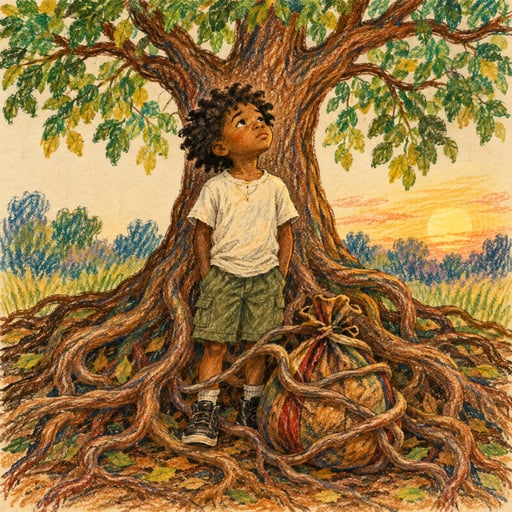
There are two rooms in Bloodline Debt. Mama is dealing with dialysis. Grandma needs help because part of her body no longer works as it once did. Between those rooms is a boy.
The song follows him down the hallway. He helps with food, teeth, pillows and the light switch. When one person needs something, he turns toward that room. When the other calls, he turns back.
The women are not simply responsibilities to him. He loves them. The lyrics even remember their different ideas about what he needed as a boy. That makes the story more complicated than a list of chores.
The title names the unfairness of the arrangement. Sharing blood should not mean that a child has to carry the needs of a family alone. Love for Mama and Grandma does not excuse the absence of the wider village.
Later, the song describes empty chairs and the habit of setting three plates. The people are gone, but the routines and memories remain. The hallway has become part of how the singer understands his life.
If you were the child who became the village, you deserve to have your love recognized without being asked to carry the entire family forever. The village owed you care too.